



Printing Tips, Style
Glossy vs Matte Paper: What’s the Difference and Which Should You Choose?
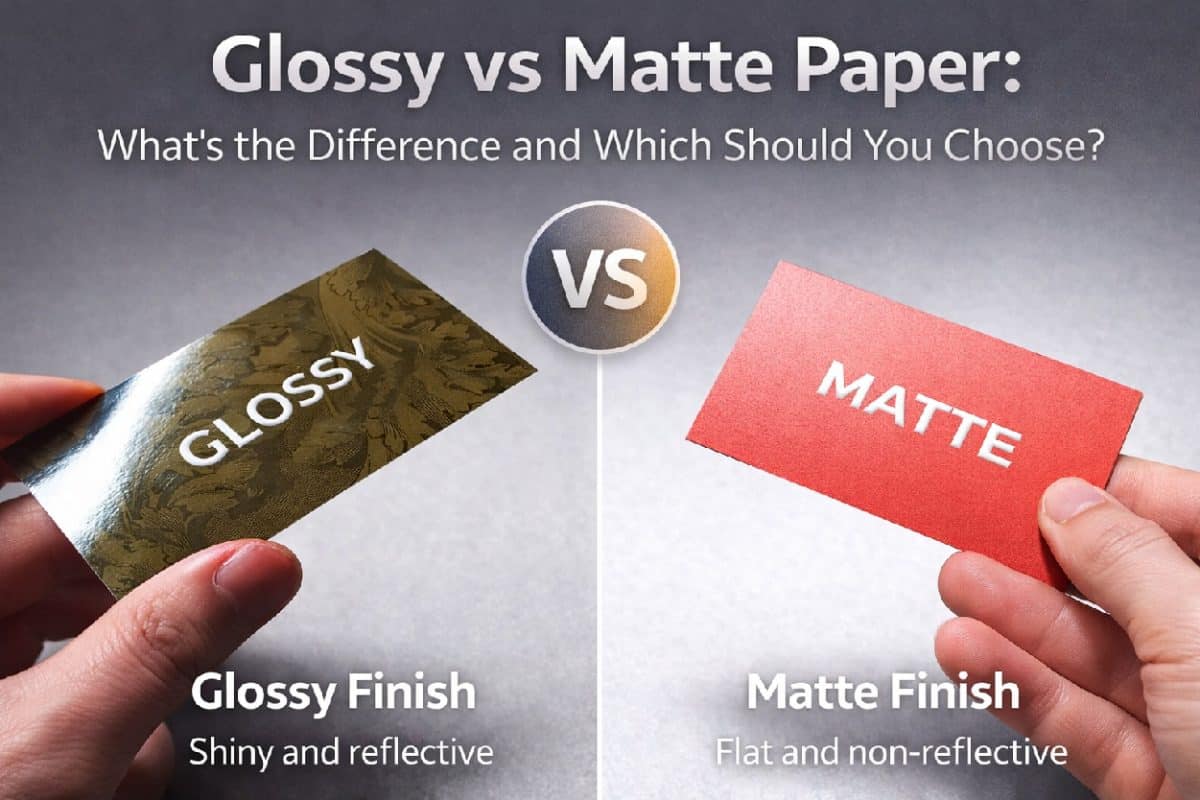
Choosing between glossy and matte paper might seem like a small decision, but it has a big impact on how a printed piece looks, feels, and performs.
Many people assume paper choice is just a matter of personal preference. In reality, the finish you choose affects color appearance, readability, durability, and even how professional a piece feels to the person holding it.
This guide explains the real differences between glossy and matte paper, when each one works best, and how to choose the right option for your project.
What Is Glossy Paper?
Glossy paper has a smooth, shiny coating that reflects light.
This coating allows ink to sit closer to the surface of the paper rather than soaking in. Because of that, colors often appear brighter, sharper, and more vibrant on glossy stock.
Glossy finishes are commonly used for business marketing materials that rely heavily on images or bold visuals.
What Is Matte Paper?
Matte paper has a smooth but non-shiny finish.
Instead of reflecting light, matte paper diffuses it. This creates a softer, more muted appearance and reduces glare. Ink tends to absorb slightly more into the paper, which can make colors appear less vibrant but more natural.
Matte finishes are often chosen for readability, writing, and a more subtle or refined look.
How Glossy and Matte Affect Color
One of the biggest differences between glossy and matte paper is how color appears.
Glossy paper enhances contrast and saturation. Photos and graphics tend to look punchier and more eye-catching. This makes glossy a popular choice for postcards, promotional flyers, and photo-heavy designs.
Matte paper produces a softer look. Colors can appear slightly darker or flatter compared to glossy, but they often feel more controlled and professional. Matte is commonly used for brochures, business cards, and documents with a lot of text.
Neither option is better in all situations. It depends on the goal of the printed piece.
Readability and Glare Considerations
Glossy paper reflects light, which can create glare under bright lighting. This can make small text harder to read, especially when the piece is viewed at certain angles.
Matte paper reduces glare significantly. Text is easier to read, and the surface is more forgiving under different lighting conditions. This makes matte a strong choice for long-form content, instructional materials, and anything meant to be read carefully.
If readability is a priority, matte usually has the advantage.
Fingerprints, Smudging, and Handling
Glossy paper tends to show fingerprints, smudges, and scratches more easily. Oils from hands can leave visible marks, especially on darker designs.
Matte paper hides fingerprints better and feels more forgiving during handling. It is often preferred for pieces that will be passed around frequently or handled repeatedly.
This is an important consideration for business cards, menus, and materials used in meetings or events.
Writing on Glossy vs Matte Paper
If a printed piece needs to be written on, matte paper is usually the better choice.
Pens and markers adhere more easily to matte surfaces. Ink dries faster and is less likely to smear.
Glossy coatings can cause ink to bead up or smear, especially with ballpoint pens. For forms, notes, or anything that requires handwriting, matte paper is the safer option.
Durability and Perceived Quality
Glossy paper often feels more rigid and substantial, depending on the stock weight. The coating can offer some protection against moisture and wear.
Matte paper can feel more natural and understated. While it may not resist moisture as well as glossy coatings, it often conveys a more premium or refined aesthetic.
Perceived quality is subjective. Some brands benefit from the bold look of glossy finishes, while others align better with the subtle feel of matte.
When Glossy Paper Makes Sense
Glossy paper is a strong choice when visual impact matters most.
It works well for:
-
Postcards and promotional flyers
-
Photo-heavy designs
-
Marketing pieces meant to grab attention quickly
-
Retail displays and visual promotions
If the goal is to stand out visually, glossy is often the right choice.
When Matte Paper Makes Sense
Matte paper excels when clarity, readability, or a professional tone is the priority.
It works well for:
-
Brochures with lots of text
- Menus and instructional materials
If the piece needs to be easy to read, easy to handle, or written on, matte is often the better option.
There Is No One-Size-Fits-All Answer
The choice between glossy and matte paper depends on how the printed piece will be used.
Consider:
-
Who will receive it
-
How it will be viewed
-
Whether it will be handled often
-
Whether it needs to be written on
-
What impression you want it to leave
Paper choice should support the purpose of the piece, not work against it.
Final Thoughts
Glossy and matte paper finishes each have clear advantages and tradeoffs.
Glossy enhances color and visual impact but can introduce glare and fingerprints. Matte improves readability and handling but produces a softer visual look.
Understanding these differences helps you make informed decisions and avoid disappointment once the piece is printed.
If you are unsure which finish is right for your project, we can help you choose based on your goals, design, and intended use. We can even generate a test print for you. That guidance alone can make a noticeable difference in the final result.
Frequently Asked Questions About Glossy vs Matte Paper
What is the main difference between glossy and matte paper?
The main difference is the finish. Glossy paper has a shiny coating that reflects light and enhances color, while matte paper has a non-shiny surface that reduces glare and improves readability.
Does glossy paper make colors look better?
Glossy paper often makes colors appear brighter and more vibrant because the coating reflects more light. This can be ideal for photos and promotional designs, but it is not always the best choice for text-heavy materials.
Is matte paper better for reading?
Yes. Matte paper reduces glare, which makes text easier to read under a wide range of lighting conditions. This is why matte is commonly used for brochures, booklets, and documents with a lot of written content.
Which paper finish is better for business cards?
Both finishes can work, but matte paper is often preferred for business cards because it hides fingerprints, feels professional, and allows for easier writing if notes are added. Another factor for business cards is paper stock and weight. See what the differences can be with or paper weight conversion tool.
Can you write on glossy paper?
Writing on glossy paper can be difficult. Ink may smear or take longer to dry, especially with ballpoint pens. Matte paper is usually the better option when writing is required.
Does matte paper look less professional than glossy?
No. Matte paper often conveys a clean, refined, and professional appearance. The perception of quality depends on the design, paper weight, and how well the finish matches the brand.
Which finish holds up better to handling?
Matte paper generally hides fingerprints and scuffs better than glossy paper. Glossy finishes can show marks more easily, especially on darker designs.
Is glossy paper more durable than matte?
Glossy coatings can offer some resistance to moisture and wear, but durability also depends on paper thickness and how the piece is used. Neither finish is automatically more durable in all situations.
Should I choose glossy or matte for marketing materials?
It depends on the goal. Glossy works well for bold visuals and attention-grabbing pieces. Matte is better for readability, frequent handling, and a more subtle presentation.
Can a printer help me choose the right paper finish?
Yes. A professional printer can recommend a paper finish based on your design, usage, and desired impression. Getting guidance before printing can help avoid costly mistakes.