



Branding, Business Tips, Print Marketing, Printing Services
What Do You Need Printed For Your New Business?

Starting a new business often comes with a long checklist, and printing is usually somewhere in the middle — important, but not always well understood. Many new businesses either overbuy printed materials they don’t need yet or underprepare and scramble at the last minute.
Understanding what printing a new business actually needs helps you launch with a professional image, avoid wasted spending, and create materials that support real growth from day one.
Why Printing Still Matters for New Businesses
Even in a digital-first world, print plays a critical role in how new businesses are perceived. Printed materials create physical touchpoints that build credibility, reinforce branding, and make a business feel real and established.
Print is especially important when:
-
Meeting customers face to face
-
Operating locally or regionally
-
Attending events or trade shows
-
Opening a storefront or office
-
Working in construction, healthcare, education, or real estate
For new businesses, print is often the first physical proof that the business exists.
The Core Printing Essentials Every New Business Needs
Not every business needs everything at once. The key is starting with the essentials and building from there.
Business Cards
Business cards remain one of the most important printed items for new businesses. They are easy to distribute, affordable, and often the first branded piece a customer receives.
High-quality business cards reinforce professionalism through:
-
Paper thickness
-
Finish (matte, gloss, or uncoated)
-
Color accuracy
-
Clean layout and typography
A poorly printed card can undermine even a strong brand.
Flyers and Brochures
When a business needs to explain what it does, printed materials still outperform verbal explanations alone.
Flyers are ideal for:
-
Promotions
-
Local marketing
-
Grand openings
-
Handouts
Brochures work well when:
-
Multiple services need explanation
-
Visual storytelling matters
-
A more polished presentation is required
Both should reflect consistent branding and be printed on appropriate paper stocks to match the business’s image.
Banners and Signage
Visibility matters — especially for new businesses trying to get noticed.
Printed banners and signage help:
-
Draw attention to a location
-
Promote events or openings
-
Reinforce brand presence
Large-format printing requires proper resolution, layout, and color control. These pieces are often seen from a distance, making quality and clarity essential.
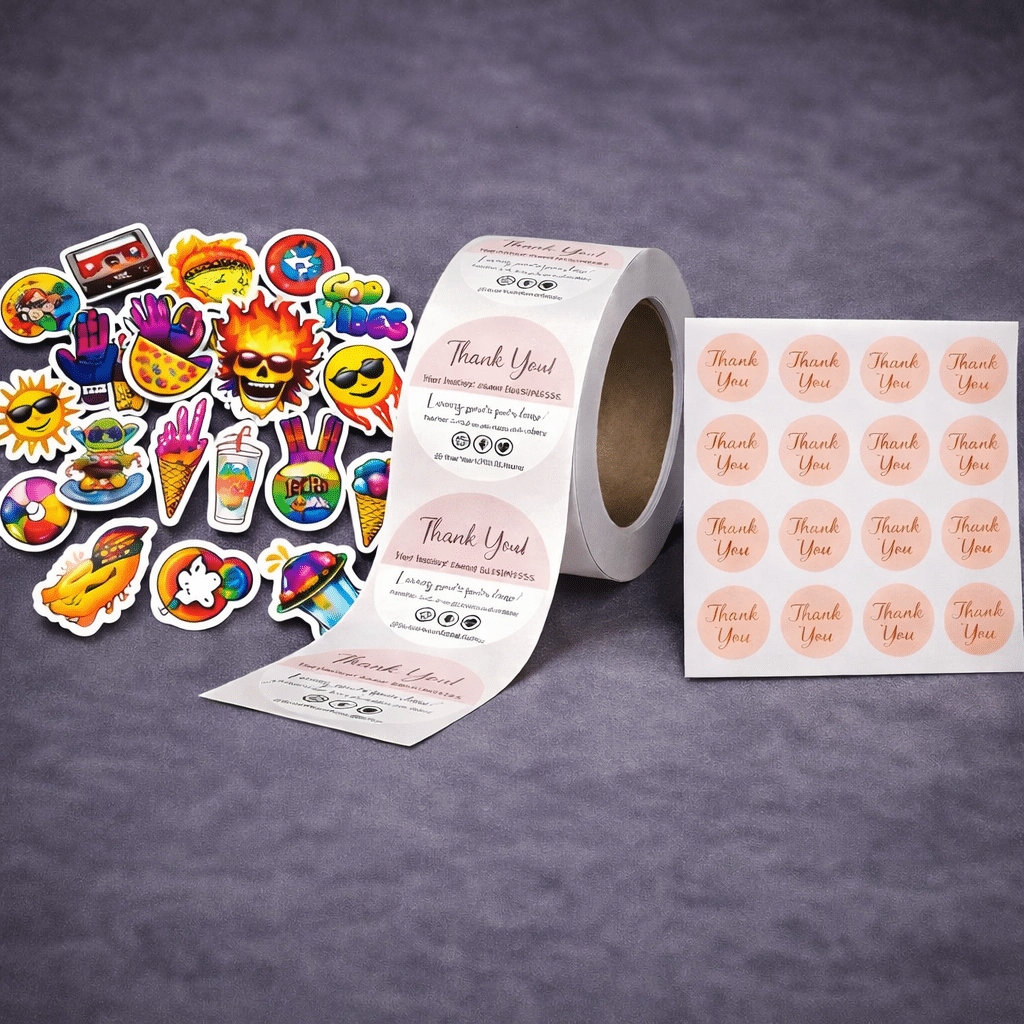
Stickers and Labels
Stickers are versatile, affordable, and surprisingly powerful branding tools.
New businesses commonly use stickers and labels for:
-
Packaging
-
Product identification
-
Promotional giveaways
-
Brand reinforcement
Well-produced stickers can extend brand visibility far beyond the point of sale.
Printing Needs by Business Type
Different industries rely on print in different ways. Understanding these differences helps new businesses prioritize correctly.
Construction & Trades
Construction companies often require:
-
Blueprint printing
-
NCR forms
-
Job site signage
-
Vehicle decals
-
Banners
Printed materials play a functional role in daily operations, not just marketing.
Healthcare & Professional Offices
Medical, dental, and professional offices typically need:
-
Forms and documents
-
Brochures
-
Posters
-
Interior signage
Consistency and clarity are especially important in regulated or client-facing environments.
Real Estate & Property Services
Real estate professionals depend heavily on:
-
Flyers
-
Brochures
-
Yard signs
-
Posters
-
Presentation materials
Print quality directly affects perceived credibility and trust.
Retail & Restaurants
Retail businesses often rely on:
-
Menus
-
Posters
-
Window signage
-
Stickers
-
Promotional materials
Printed materials must be durable, visually appealing, and easy to update.
Common Printing Mistakes New Businesses Make
Many new businesses run into issues simply because they haven’t planned ahead.
Common mistakes include:
-
Ordering too much too soon
-
Choosing the wrong paper or finish
-
Using low-resolution artwork
-
Ignoring brand consistency
-
Rushing print jobs without proofing
Professional printing helps avoid these problems by ensuring materials are produced correctly the first time.
How Printing Scales as a Business Grows
A smart printing strategy evolves over time.
Early-stage businesses typically start with:
-
Business cards
-
Flyers or brochures
-
Basic signage
As the business grows, printing often expands to include:
-
Booklets
-
Folders
-
Posters
-
Custom marketing materials
-
Branded packaging
Starting with scalable designs makes future printing easier and more cost-effective.
Why Print Quality Matters More Than Quantity
More printing doesn’t equal better marketing. Strategic printing does.
High-quality materials:
-
Last longer
-
Reflect professionalism
-
Reinforce brand trust
-
Make stronger impressions
It’s better to invest in fewer, well-produced pieces than to distribute large quantities of low-quality print.
Planning Printing the Right Way
The most successful new businesses treat printing as part of their overall branding and marketing strategy — not a last-minute task.
Helpful planning tips:
-
Finalize branding before printing
-
Use print-ready file formats
-
Proof materials carefully
-
Choose paper and finishes intentionally
-
Work with experienced print professionals
This approach saves time, reduces waste, and produces better results.
Final Thoughts
So, what printing does a new business actually need? The answer depends on the business, but the goal is always the same: present a professional, consistent image from the start.
By focusing on essential printed materials first and scaling thoughtfully, new businesses can use print to build credibility, support growth, and make lasting impressions where it matters most — in the real world.
Frequently Asked Questions About Printing for New Businesses
What should a new business have printed first?
Most new businesses should start with business cards, basic flyers or brochures, and simple signage if they have a physical location. These items establish credibility and provide essential information without overcommitting to large print quantities.
Do new businesses really need printed materials anymore?
Yes. Printed materials help new businesses feel legitimate and professional, especially in face-to-face interactions, local marketing, events, and storefront environments. Print complements digital marketing rather than replacing it.
How much printing should a new business order initially?
It’s usually best to start small. Ordering moderate quantities allows you to test messaging, branding, and materials before committing to larger print runs. Printing can scale as the business grows and needs become clearer.
Is professional printing worth it for a startup?
Professional printing helps ensure color accuracy, proper paper selection, and consistent quality. Poorly printed materials can make a new business appear unprofessional, even if the branding itself is well designed.
What printed materials are most important for local businesses?
Local businesses often benefit most from business cards, flyers, posters, banners, and window signage. These materials help attract nearby customers and reinforce local brand visibility.
Do online-only businesses need printing?
Even online businesses can benefit from print. Items like branded inserts, stickers, packaging materials, and event handouts help reinforce branding and create a tangible customer experience.
What common printing mistakes should new businesses avoid?
Common mistakes include ordering too much too early, using low-resolution artwork, choosing inappropriate paper stocks, and ignoring brand consistency. Planning ahead and proofing carefully helps avoid wasted spending.
Should branding be finalized before printing?
Yes. Finalizing logos, colors, and fonts before printing helps prevent inconsistencies and reprints. Having a clear visual identity makes it easier to produce professional-looking materials across all formats.
How often do new businesses need to reprint materials?
Reprints depend on growth, updates, and usage. Many businesses reprint business cards or flyers periodically as staff, services, or contact information changes.
Can printing be updated as a business grows?
Absolutely. Printing should evolve alongside the business. Many companies start with basic materials and expand into brochures, booklets, custom signage, and branded packaging as their needs grow.
How does print quality affect customer perception?
Print quality directly influences how customers perceive a business. High-quality printing signals professionalism and attention to detail, while poor print quality can damage trust and credibility.
Is it better to print many items at once or spread orders out?
For new businesses, spreading print orders out is often smarter. This allows flexibility, reduces waste, and gives time to refine branding and messaging before larger commitments.